
Drama & Theatre A Level
Course Overview
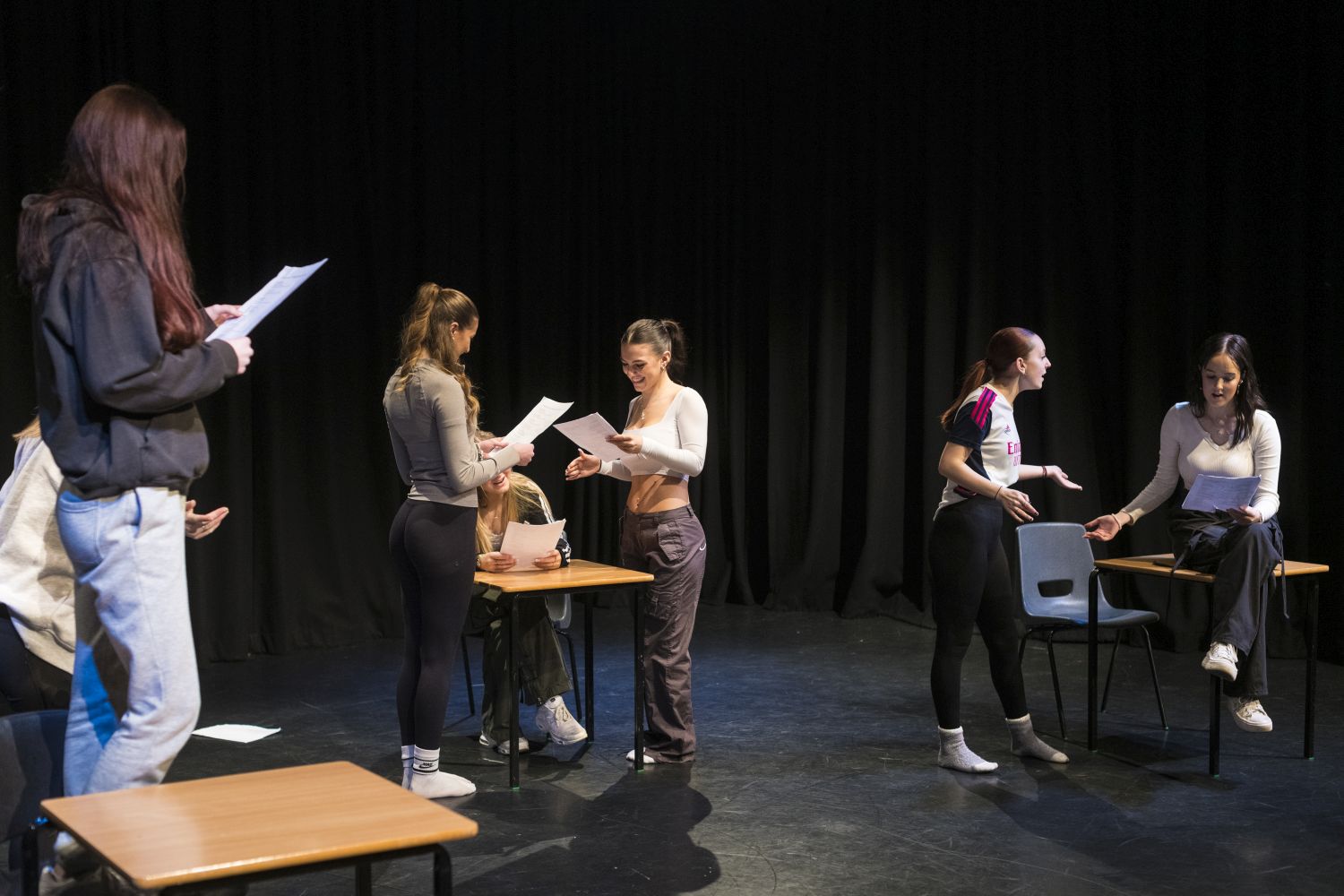
Drama and Theatre Studies is an exciting, inspiring, and challenging course which encourages creativity and independence, enabling you to become an effective theatre maker as a performer and/or designer. It is a highly practical course which prepares you for further study in higher education and drama schools.
The course is divided into three components:
- Theatre Workshop: will see you studying a practical reinterpretation of a chosen text extract which you will develop using the working methods and techniques of a chosen practitioner or theatre company. The written coursework documents your creative process. You can work as either a performer or a designer.
- Text in Action: is a practical component where you will create, develop and perform/design a devised piece and a scripted piece. The written coursework documents, analyses and evaluates your creative process.
- Text in Performance: consists of both theoretical and practical study of three set texts from actor, director and designer perspectives, which will demonstrate your knowledge and understanding of how drama and theatre are developed and performed. You will also analyse the work of others by viewing live theatre productions.
The main focus of the course is the interpretation, development and making of theatre in preparation for both devised and scripted live performances. You will have the benefit of working with industry-trained staff and practitioners within the department, who have many years of experience in teaching Drama and Theatre and preparing students for auditions.
Year 1 Modules
- Theatre Workshop
- Text in Action
- Text in Performance
Year 2 Modules
- Theatre Workshop
- Text in Action
- Text in Performance

Key Info
Minimum Entry Requirements
- Five GCSEs at Grade 5 including:
- Grade 5 in GCSE English Literature
- Grade 4 in GCSE English Language
- A successful audition where you demonstrate the practical performance or theatre design skills required for the course that you may not have had the opportunity to show at school.
Assessment
- 40% Exam
- 60% Coursework
- Exam Board: EDUQAS
Audition Requirements
The audition process is a really important and valuable part of your application and a reflection of practice within the Performing Arts industry. Therefore, the purpose of this audition is to allow you to showcase your skills and to ensure your suitability for your chosen course.
Why choose this course?
You will enjoy this course if you are creative and interested in studying and making theatre, as a performer and/or a designer; or you are considering a profession in the entertainment industry.
Our Drama and Theatre course is taught in excellent purpose-built facilities, which include rehearsal rooms and a fully functional black box theatre. Visiting theatre groups and practitioners, theatre trips and enrichment activities such as working towards LAMDA Acting qualifications ensure that any student studying at Long Road has the opportunity to develop their skills beyond the study timetable.
Skills you'll gain
On this course you will:
- Develop an informed, analytical framework for making, performing, interpreting and understanding drama and theatre.
- Appreciate and experience live theatre.
- Develop analysis and evaluation skills.
- Appreciate how the social, cultural and historical contexts of performance texts have influenced the development of drama and theatre.
After Long Road
The course includes preparation for students considering Drama and Theatre courses at university and actor training at major Drama schools. It is also an excellent grounding for interpersonal skills such as communication, confidence building, organisation and teamwork in preparation for careers in areas such as law, social work, psychology and teaching.
Drama has been an amazing experience. The new skills that you learn help you develop independence that you can interpret into other aspects of your life.