
Safeguarding and Child Protection
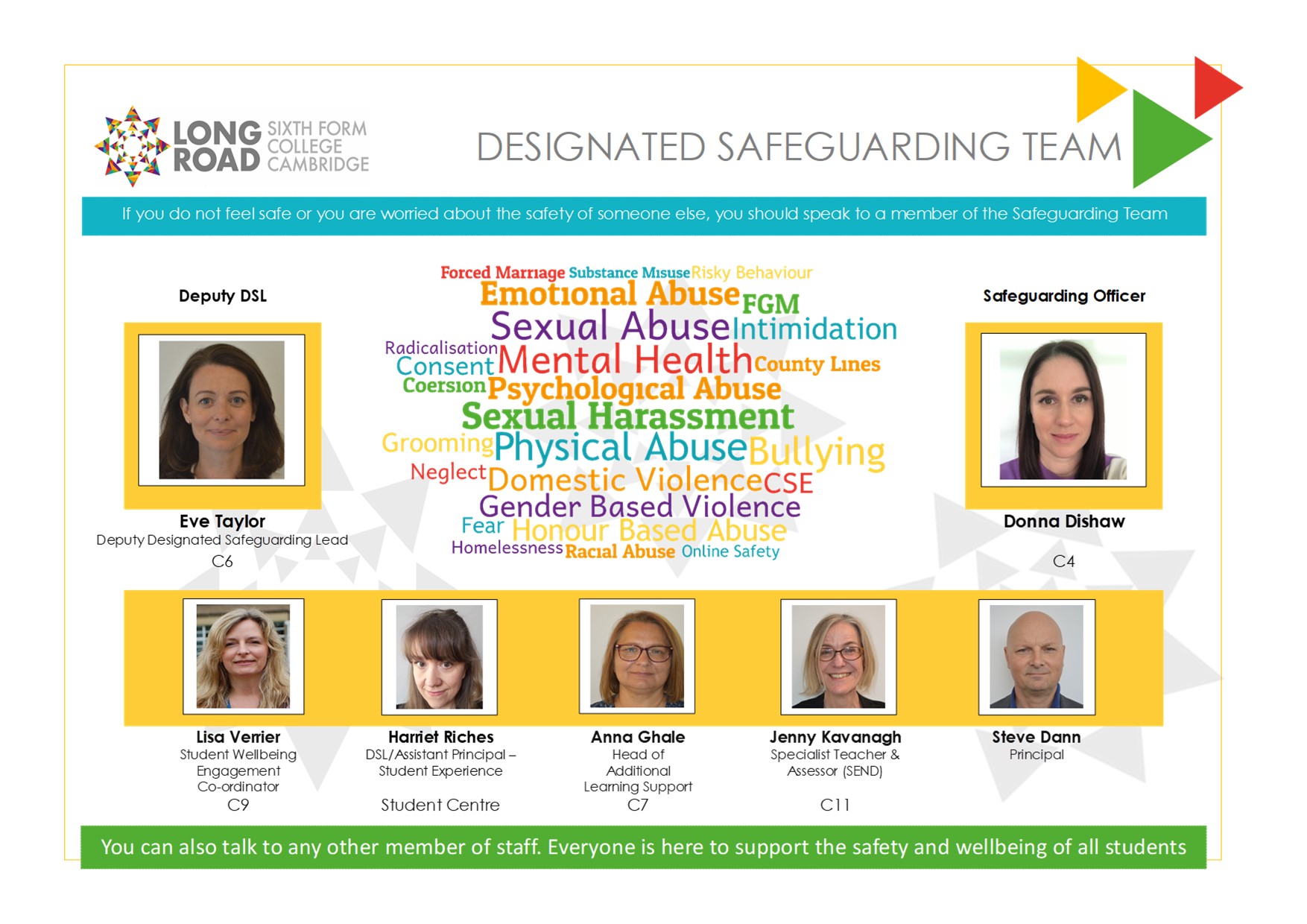
Under the Education Act 2002 (section 175/157), colleges and colleges must “make arrangements to safeguard and promote the welfare of children”. We will endeavour to provide a safe and welcoming environment where children are respected and valued.
The college will therefore be alert to signs of abuse and neglect and will follow the Education Safeguarding Team procedures to ensure that children receive appropriate and effective support and protection. Child Protection is for all young people up to the age of 18. The definition of a vulnerable adult is defined in ‘No Secrets’ (the Government’s Guidance on Adult Abuse) as: ‘a person aged 18 years or over, who is in receipt of or may be in need of community care services by reason of ‘mental or other disability, age or illness and who is or may be unable to take care of him or herself, or unable to protect him or herself against significant harm or exploitation’.
Parents/carers should know that the law requires all college staff to pass on information which gives rise to a concern about a child’s welfare, including risk from neglect, physical, emotional, or sexual abuse. The college should make parents/carers aware that records of welfare concerns may be kept about their child. They should be informed that college staff will seek, in general, to discuss any concerns with them including referrals to other agencies. However, in certain situations where the child is suspected to be at risk of harm, the law says that colleges may take advice from other agencies without informing parents/carers.
In accordance with local Information Sharing protocols, we will ensure that information is shared securely and sensitively. Information will only be shared with other services where it is deemed necessary and proportionate to ensure that children and young people are safe and receive the right service.
Colleges will seek advice from Social Care when they have reasonable cause to suspect a child may be suffering or likely to suffer significant harm. Occasionally, concerns are passed on which are later shown to be unfounded. Parents/carers will appreciate that the member of staff in the college with responsibility for child protection (known as the Designated Safeguarding Lead) was carrying out their responsibilities in accordance with the law and acting in the best interests of all children.
Under Section 3 (5) of the Children Act 1989, colleges or any person who has care of a child “may….do what is reasonable in all the circumstances of the case for the purpose of safeguarding or promoting the child’s welfare”.
What to do if your child goes missing?
For further reading, please see our policies below: